Living Out Loud

by Meagan Gardner
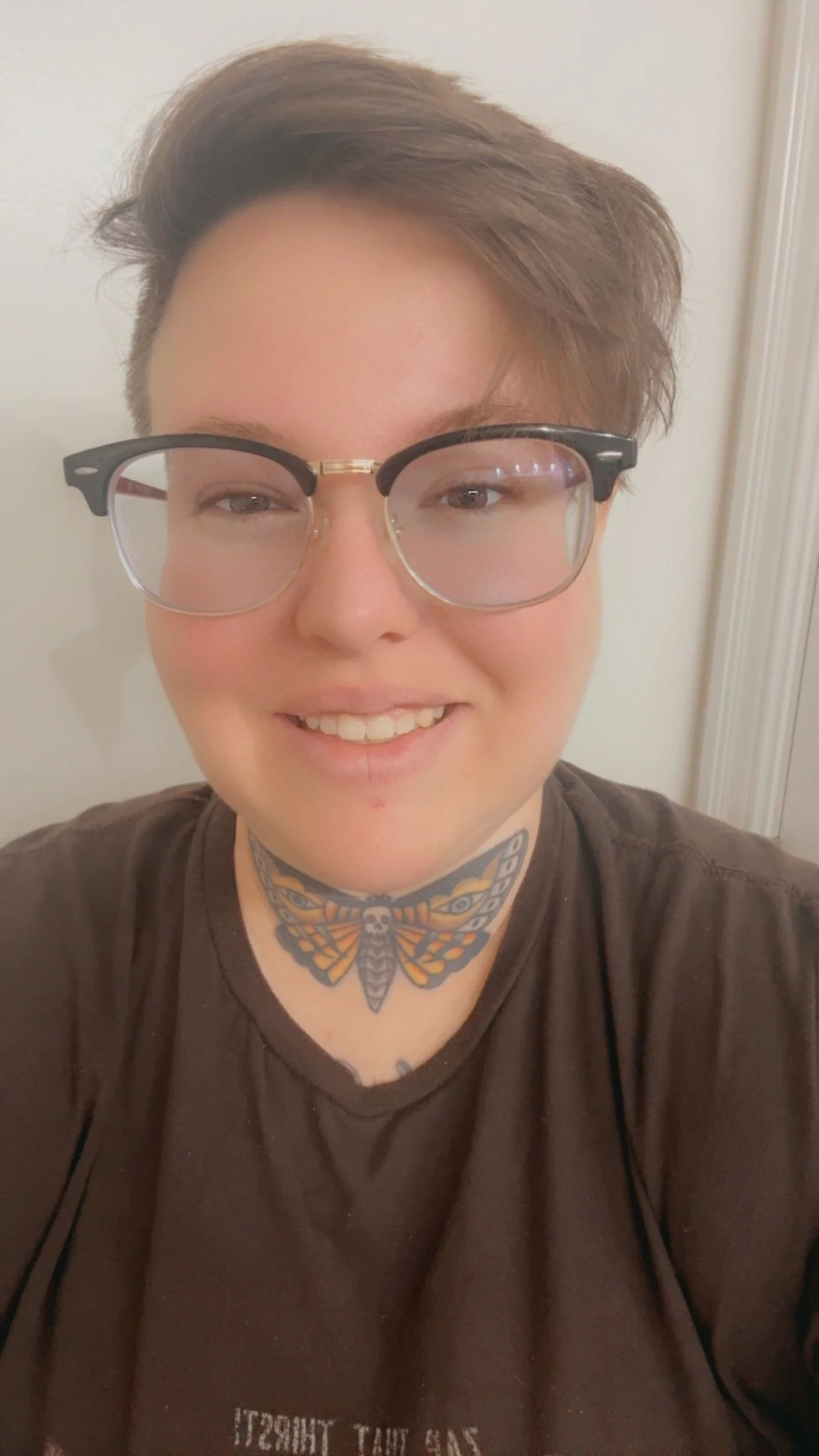
I was thirty-two, but sometimes I felt both younger and older than that. My body was still strong, honed by years of early mornings and long runs, but my mind was tired in a way that eight hours of sleep couldn’t fix. On days like this, I wondered if the fatigue was just part of being a veteran, or if it was really about never quite fitting in. I was used to being the only woman in the room, sometimes the only one with visible ink. My arms and legs were canvases of stories, some joyful, some secret, all precious. My hair was short and neat, a holdover from my service days, maybe a way to show I still belonged, or maybe a small act of rebellion against the expectation that I’d grow it out, become “softer.”
I checked the time. Ten minutes until my appointment, but I’d learned long ago that “appointment times” at the VA were suggestions at best. I could be here for an hour or more, trapped in that stuffy room with people who didn’t know what to make of me.
That’s not very becoming of a young woman. The words reverberated in my memory, sharp and unsolicited. I’d been sitting quietly when an older man, his ball cap stitched with “Korean War Veteran,” leaned over to offer his opinion on my appearance. I’d smiled, nodded, let the words roll off my back, but they always left a residue. I was used to men like him, used to their discomfort with my tattoos, my hair, my wife. I’d mastered the art of cool indifference, yet the truth was, it stung. It felt like a disinvitation from a club I’d already paid my dues to join.
Today, though, I had a plan. I reached for my security blanket, a well-loved paperback, the spine soft and the pages worn, with frayed edges and marks from dog-earing it. I’d decided that this time, I’d bury myself in the story and create my own barrier. Surely the universal language of “do not disturb” would be respected. I tucked the book under my arm, grabbed my umbrella, and readied myself for the dash through the rain.
Inside, the saturated air hung heavy with the scent of disinfectant and the slight, bittersweet odor of old coffee. The front desk attendant, a young guy with a neat mustache and tired eyes, barely looked up as I checked in. His fingers moved over the keyboard, and with a perfunctory instruction to “take a seat and wait,” I was set adrift in no-man’s-land.
I scanned the waiting room with a trained eye. A television mounted high in the corner played a muted news channel, the closed captions marching across the bottom. The chairs were arranged in neat rows, half occupied by men in various shades of military memorabilia, hats, jackets, and pins. Some sat alone, staring into space; others clustered in pairs, speaking in low, gravelly voices. There were a few younger vets, one in a wheelchair, another scrolling his phone, but mostly, it was a sea of gray.
I searched for a corner, a safe harbor. That’s when I saw him: an old man, maybe late seventies or early eighties, sitting alone by the window. He didn’t have a phone or a newspaper, just a thermos and a shabby ball cap in his lap. He watched out at the rain with an expression that appeared both wistful and content, as if he was remembering something sweet.
I made my way over, choosing a seat three chairs away, close enough to not seem rude, far enough to maintain my bubble. I settled in, shaking the rain from my umbrella and tucking it under my seat. I crossed my legs and opened my book, letting the familiar words fill my mind. For a few precious moments, I was invisible. The story drew me in, its characters and conflicts more immediate than my own. I almost forgot where I was, and almost shut out the anxious tightness in my stomach.
But out of the corner of my eye, I saw him notice me. I felt his gaze first, a subtle curiosity rather than the usual skepticism. I kept my eyes focused on the page, hoping he’d look away, but after a moment, I heard him clear his throat softly.
“What is that?” he asked, his voice mild, inquisitive. “Oh! That’s a pickle, isn’t it?”
I silently sighed. So much for my plan. I lowered my book and returned his gaze. Up close, his eyes were bright blue, still sharp with life, rimmed with laugh lines and something softer. Kindness, maybe.
“Uh…yeah, well, kind of.” I glanced at the tattoo on my leg. “It’s a character from a show my wife loves.” I dropped the word “wife” deliberately, a subtle shield I’d learned to wield. Sometimes it stopped conversations cold; sometimes, it opened better ones. I braced myself for the incoming condescension out of habit.
“Well, how about that. That’s pretty neat,” he said, smiling. No hesitation, no judgment. I let out a breath I hadn’t realized I was holding.
“Thank you,” I replied, starting to lift the book again, but he wasn’t done.
“You know, my granddaughter just started doing tattoos. She’s getting pretty good, too.” His face lit up with a look of pride. “I told her I want her to do a dragon on the back of my leg. She says she’s not ready, but I tell her, ‘I don’t care how it looks, just as long as it’s you that does it.’ ”
I lowered the book, interest piqued. “That’s really cool. I had my cousin tattoo my kids’ zodiac signs on me. It made it all the more special.”
He nodded, eyes twinkling. “Ain’t that a fact. My granddaughter looks a lot like you, tattoos everywhere. I always told my kids and grandkids, ‘It’s your skin. Wear your story, however you want. My generation didn’t get that. It’s a shame, you know. You shouldn’t feel like you’re confined to a box.’ ”
I felt myself soften, the walls coming down a little. “Most people don’t see it that way.”
The old man glanced over at me, his lips quirking in a small, almost secretive smile. “Maybe most people don’t look close enough,” he said quietly, as if sharing a confidence. Then he shrugged, letting the silence stretch comfortably between us, his presence alone offering reassurance.
“Did you ever feel like you didn’t belong?” I asked quietly, surprising myself.
He was quiet for a moment, the rain tapping softly against the glass. “All the damn time,” he said finally. “Even with my buddies. Sometimes, especially with them. After I came back, I’d walk into a room and feel like a ghost. People wanted the war story, but not the war. They wanted to see medals, not scars. You know what I did?”
I shook my head.
“I stopped trying to fit in. Started trying to find people I could fit with instead. There’s a difference. Some folks, you could twist yourself into a pretzel, and they’d still find a reason to keep you out. Others, you just show up as you are, and that’s enough.” He leaned in, lowering his voice. “You know, people always talk about courage. They think it’s about running toward gunfire or standing tall when you’re scared out of your mind. But the real courage? It’s waking up every day and choosing to be yourself, even when the world says you should be someone else.”
I swallowed, the words landing somewhere deep. He smiled at me, and in that moment, I felt seen, not as someone to be judged or fixed, but as someone to be understood. I closed my book, leaving my finger in the pages as a lifeline.
“How many tattoos do you have?” I asked, needing to lighten the weight between us.
He grinned, rolling up his sleeves. “Just got these two here.” He pointed to a faded eagle on his left forearm and a mangled mess on his right. “This one here,” he said, indicating the eagle, “I got after getting back from Vietnam. One of those old flash tattoos. I was drafted, didn’t have much choice. Did my tour, one year and one day. After I came back, I spent some time at a base in Texas, waiting. I got so drunk one night, had the itch to see the local tattoo artist.” He chuckled, eyes distant. “He told me, ‘Not supposed to tattoo you with that liquor in you, boy, but if you don’t mind sharing, I’ll do it anyway.’ We passed a bottle back and forth. By the end, I was pretty well faded. When I tried to pay him, he wouldn’t take a dime. Said, ‘You already paid enough for this tattoo with what you been through.’ Let me tell you, at that time, people didn’t like us veterans that much. They even spat on us when we returned home. That act of kindness was the first I’d seen in a long time. He reminded me that there was still good in the world. I decided then that I’d remember that kindness and pass it on as often as I could.”
I listened, captivated, the room fading away. “That’s incredible. People don’t always realize what a small kindness can mean.”
He nodded, then turned his other arm. “This one, I got for my time in Vietnam. Used to say Vietnam, but I had to get surgery to remove some cancer. Now it just says ‘Vitna.’ Fitting, I guess, got the cancer there in the first place. Agent Orange.”
A shadow passed over his features. I felt a stab of sympathy.
“I’m so sorry,” I said. “I’ve read about Agent Orange but I’ve never talked to someone affected by it.”
He shrugged, more accepting than bitter. “Don’t feel sorry for me. I’m seventy-eight. I was married to the love of my life for fifty-one years. Three kids, a pile of grandkids, and more good memories than bad. I’ve evaded death plenty. When it comes, I’ll be ready. Be nice to see my Peggy again.”
I smiled, surprised by his peace and acceptance of his fate, even while staring down the barrel of inevitability. “How did you meet her?”
His eyes softened. “USO dance, 1967. She wore a red dress, swore she couldn’t dance, but she let me lead her anyway. Wrote me every week I was in Nam. I kept those letters in my helmet. When I got back, she was waiting at the station, tears and all. She never asked me to change, just loved me as I was. You got someone like that?”
I nodded, my own memories surfacing—my wife’s laughter, the way she squeezed my hand in the dark when nightmares woke me.
He patted my hand, his fingers warm and steady. “That’s what matters. Not how you look, or what anyone else thinks. Just love and being loved.”
He studied his thermos, turning it over in his hands. For a moment, he seemed far away. “You ever lose someone?” he asked softly.
I hesitated, thinking of friends gone too soon, of the ache that never quite healed. “Yeah,” I said. “A couple. It never gets easier.”
The old man nodded, staring out at the thinning rain. “You mind if I tell you about Charlie?”
I shook my head. “Not at all, I’d love to hear your story.”
He breathed in slowly, the lines in his face deepening. “Charlie was the bravest kid I ever knew. He was from Louisiana, barely eighteen when he shipped out. Had a laugh you could hear over artillery fire and the kindest heart you ever did meet. First week in Nam, he was scared stiff, but he never showed it. He just kept his eyes open and his mouth shut, and he listened.” He paused, his fingers trembling ever so slightly. “We were on patrol one night, just outside Da Nang. It was moonless, couldn’t see your hand in front of your face. We heard something moving in the bush, and before I could even say ‘hold up,’ Charlie was already moving, slow, careful. He signaled us to stop. Turns out, it was a local kid, maybe six or seven, just lost. Scared out of his mind. Charlie put his weapon down and just…sat with the boy. Whispered to him. Sang to him, real soft, like he was singing to his little sister.” He smiled at the memory. “That’s the thing about Charlie. He saw people, not enemies. The next day, he found the kid’s mother and brought them back together. He never bragged about it, never even told command. Said it was just the right thing to do.”
My throat felt tight. “What happened to him?”
His voice was quiet. “A couple of months later, we lost him to a mine. He saved my life, threw me out of the way. I always wondered why he did it. Maybe he thought I needed saving more than he did.” He let the silence settle between us, heavy but not suffocating. “You know, every year I write his name in the sand on the day he died. I go to the riverbank, just me and a flask, and I write Charlie and let the water carry it away. It hurts, but it helps. Makes me feel like he’s still with me.”
I wiped at my eyes, not caring if he saw. “That’s beautiful,” I said. “Thank you for telling me.”
He nodded. “Those are the stories that matter. Not the medals, not the battles. The people. The kindnesses. The times you chose to see the person in front of you, and not just the uniform.”
He looked at me, really looked, and for a moment I felt as if he’d handed me something precious, something I was meant to carry forward.
The old man’s story sat between us, gentle but heavy, a presence of its own. I felt a prickling behind my eyes, the kind that comes when you’re holding back tears but not quite sure why. I wanted to say something, to offer something back, not out of obligation, but because his willingness to be open made it feel safe to do the same.
I cleared my throat. “I…I don’t usually talk about this stuff, either. I always figured, you know, you keep your head down, you keep moving, you don’t let people see you bleed.”
The old man nodded, his eyes never leaving mine. He waited, patient and unhurried, the way only someone who’s spent a lot of time listening can.
“After I got out,” I began, “I didn’t know what to do with myself. My wife, Lily, kept telling me I didn’t have to have it all figured out, but I couldn’t help feeling like I was failing us. I had nightmares—still do, sometimes. I’d wake up choking, gasping, and Lily would just…hold me. She never tried to fix it, never told me to get over it. She’d just be there, quiet, her hand on my back until I could breathe again.”
I paused, fighting back a wave of shame and gratitude all tangled together.
“There was one night,” I went on. “One bad night, when I told her maybe she’d be better off without me. That I was too broken. I meant it, too. I really thought she’d be happier with someone else. Someone whole. She just looked at me and said, ‘You’re not broken. You’re changed. So am I. We just have to figure out who we are together now.’ ” I shrugged, not sure how to end the story. “Some days I believe her. Some days not as much, but I guess I’m still trying.”
The old man leaned forward, his voice gentle but firm. “Sounds to me like you found yourself a Peggy. Not everyone gets that.”
I gave a shaky laugh. “Yeah, I’d like to think so.”
He smiled. “Let me tell you something. I spent years thinking I had to carry everything myself—pain, mistakes, fear. I thought if I let anyone else help, I’d be weak. But Peggy showed me the truth. That letting someone love you, letting them see the worst of you and stay, that’s strength. Anyone can put up walls. It takes guts to let ‘em down.”
I nodded, experiencing a strange sense of relief, as if his words released something I’d been holding onto too tightly. “Sometimes I worry I’m too much.”
“The right ones will always have room for all your ‘too much.’ And if you ever forget that, just remember, if a grumpy old vet like me can be loved for fifty-one years, you’ve got nothing to worry about,” he said with a twinkle in his eyes.
He reached over and squeezed my hand. “You’re doing just fine, kid. Just keep showing up, scars and all. That’s what makes you real.”
I squeezed back, grateful for the warmth, the kindness, the understanding. We sat there, two strangers with old wounds and stubborn hearts, sharing a kind of silence that felt like a balm. The rain outside slowed, and sunlight began to peek through the clouds.
A nurse appeared in the doorway. “Green!” she called.
The old man stood, smoothing his shirt. “That’s my cue,” he said. “Sorry for bothering your reading you were doing there.”
“Not at all, Mr. Green. Thank you for sharing your stories and kind words.”
He shook my hand, his grip strong. “Thank you for listening and being kind. That’s rarer than you think.”
He turned, then glanced back, a mischievous spark in his eye. “Don’t ever let anyone tell you who to be. The world needs more people who live out loud.”
And then he was gone. The waiting room suddenly felt achingly empty. I looked to the seat next to me, surprised to find my book lying there. I didn’t remember setting it down.
I sat amid that silence for a long time, sensing the burden of his absence as keenly as I’d felt his presence. The conversations in the waiting room faded to a quiet drone. I watched a shaft of sunlight move across the linoleum, and I wondered how many stories like his disappeared every day, unshared and unremembered.
I glanced down at my hands, tracing the design inked on my wrist, thinking about what it meant to live out loud. I realized how easy it had been to shrink myself, to hide behind books and silence, to blend into the muted palette of the waiting room. Mr. Green’s words resounded in my mind: Anyone can put up walls. It takes guts to let ‘em down.
Over the months that followed, each time I returned to the VA, my eyes instinctively turned to the chair by the window, searching for Mr. Green’s familiar silhouette, but the seat remained empty—a quiet reminder that our paths only crossed once. Still, those brief moments we shared on that rain-soaked morning stayed with me, quietly reshaping the way I moved through the world. I didn’t know then that our single conversation would be both the first and last, but I carried his words with me, proof that even a passing encounter can leave a lasting mark.
One gray morning, as I passed the bulletin board in the clinic’s lobby, something caught my eye. There was a plain sheet of paper, taped up and crooked. With our condolences, we remember Harold Green, Vietnam Veteran. Survived by family and friends, and all those he made feel noticed. There was a small color photo under the notice. It was Mr. Green, in his ball cap, his arm around a young woman with wild hair and tattoos, both of them smiling at the camera as if sharing a secret.
I stood there for a long moment, the bustle of the clinic fading around me. A subtle ache rested in my chest. I realized, with a brief pang, that I’d been carrying the hope of another conversation, just one more story, a chance to tell him his kindness had mattered, but that’s not how these things work. People like Mr. Green pass through your life like rays of sunlight through rain—unexpected, brief, but leaving color where you least expect it.
When I finally moved, I laid my palm to the photo, a silent thank you for the gift he gave me—a reminder of how even brief connections can change us, that listening is an act of love, that to live out loud is to leave a legacy that ripples on quietly, long after we’re gone.
“Say hi to Peggy for me,” I said as I walked away.
Now, when I walk into the waiting room, I keep my book in my bag. I look for stories instead. Sometimes, when I see someone sitting alone, I sit nearby, open and unhurried, just as he did for me. And sometimes, when the stillness feels unbearably heavy, I tell them about Mr. Green. I tell them how a stranger taught me that kindness leaves a mark deeper than any ink, and that the bravest thing we can do is reach across the distance, listen, and let ourselves be seen.
I sat in my car outside the VA doctor’s clinic and watched the morning drizzle bead and race down the windshield. Each drop obscured the world beyond, smearing the brick building and the stoic American flag into watercolor smudges. Rain always made me reflective, and this morning was no exception. I twisted my wedding ring around my finger, the metal icy and grounding. I could already feel the familiar dread squeezing in my chest—the anticipation of the waiting room, the stares, the awkward silences, the unstated judgments.
About the Author
Meagan Gardner is a new and emerging writer based in Kansas City, Missouri. Previously unpublished, Meagan is an artist by trade who recently shifted her creative focus to the written word. Her work explores themes of identity, belonging, and the quiet power of everyday connection. You can find her on Facebook at Gardner Art and on Instagram – @GardnerArtOfficial.