Literary Fiction
Karlis Wilde
“Care about the books, care about the people.”
The two were less compatible than they seemed, Jackie thought as he wrangled the line. “PLEASE,” he shouted. “Around the corner, single file. Pedestrians still need to get by.”
RIP to common sense. The brick walls were streaked in an old red, leading up to minimalist yellowed signage: Purcell & Son Booksellers—We buy and sell! Originally a small storefront, the Philly fixture had expanded a half-dozen times through the decades, taking over most of the block back in the 90s.
Those days had been easier, Jackie thought, hearing the bell ring over his head and smelling paper and ink. The chains on his jeans jingled as he locked the door behind him, remembering an interview his dad gave to Bookselling Magazine in 2004. “Customers want to go to a place where the staff cares about them,” his dad said. “Amazon? It’s just a fad. The brick and mortar stores, that’s what’s going to last.”
He’d been both right and wrong. Too many customers now grazed bestseller and recommendation tables with phones in hand, placing cheaper orders online. They walked out with performatively branded totes and little else. At least nobody likes eBooks, Jackie thought.
“Boss?” Ursula approached through the non-fiction shelves. She wore overalls and half her head was shaved. “Mr. Checkers is saying that he won’t drink the Poland Springs water. He says he wants Saratoga.”
“I don’t know what that means.”
“It’s a different brand.”
“I figured.”
“Do we have any?” she asked.
Jackie just stared at her.
“Right. Okay,” she said. “I’m going to see what I can find at the bodega.”
“Sure.”
Ursula was from Brooklyn and she never let anyone forget it. She rushed out the front door while Jackie monitored the displays. While makeshift, they’d gathered enough copies of Peter, Paul, and Mary to sate most interest, with the black and red A NETFLIX FILM stamp on the cover. Half of the copies showed George Clooney’s face, the rest boasted the original orange minimalist cover.
Care about the books, Jackie thought. He went to the fiction aisle and pulled out seven or eight paperbacks of Checkers’ short stories collection, You Will Not Grow Old, Grandpa, and added them to the display before heading to the performance space.
Martha sat at the bar drinking a frothed coffee. “You like?” she said.
“Abso-lutely,” he said, thinking she was talking about the way she’d changed out her usual crimson lipstick for one two shades darker. He quickly realized she was gesturing to the new canvas banner, set up along the small wooden stage.
Booker Prize-shortlisted author John Checkers returns with SANDANISTA
the biggest book of 2026.
The author’s greying face was shown in profile, with a plaintive hand to his chin. He was clean shaven with thick horn-rimmed glasses on his nose. They were an affectation, Martha told him once; Checkers got LASIK in 2018. The book’s new artwork was shown next to him, a yellow and black cover spattered with stick figures.
“Get an ARC for me yet?”
Martha laughed. “I wish,” she said. “We haven’t even got the thing to print.”
“No?”
“He’s been making Suzy go to his Long Beach house with a highlighter for the edits,” she said. “She corrects them, then he type them up on his Underwood. It’s insufferable.”
“Jesus.”
“At least the book’s worth it.”
“Is it?”
Martha nodded. “It’s surprisingly deep. Commercial, too.”
She sipped her coffee, and he remembered their one night in LA a decade ago after too many martinis. She told him that Pennystocks, his first attempt at a novel, just wasn’t sellable. It was good art, but good art didn’t have commercial value. A month after they slept together, she told him they should just be friends, and he’d done his best with it ever since. Their friendship had been good to him, anyway. She liked to talk about William Gaddis novels and Park Chan-Wook films. An agent at Umbrella House, she’d also been a great resource for the store’s coffeehouse readings, which helped to establish Purcell’s as one of the most important literary venues in the city.
“Universal’s already bought the movie rights, sight unseen,” Martha said. “They’re hoping to get Baumbach on the script. Maybe to direct, too.”
“Fascinating,” Jackie said.
“You don’t sound so enthused.”
He shrugged. “Not really into Checkers. More of a chess guy.”
Ursula burst through the front door with a bottle of Fiji in one hand and Smart Water in the other. It was close enough to eight, and she forgot to lock the door, so Jerry started taking tickets. The event was sold out and the space quickly filled with diverse clientele: preppy students from UPenn, octogenarians in sport coats, soccer moms and baseball dads.
When every plastic chair was filled, with standing room overflowing in the back, Giller Prize-winning author Andrea Beaumont took the stage to a casual splash of applause. She introduced the schedule: a reading, then a conversation. This would be followed by a question and answer period. Checkers was greeted with resounding applause. He was tall and had shoulder-length hair tickled with grey. He wore a tan jacket with soft shoulders over a button-down shirt and tie. He waved with humility as he came to the microphone, carrying a thick pamphlet of sheets.
The audience listened with rapt silence as he read the first chapter of SANDANISTA. It was immediately apparent that this new work was nothing like his last novel; while still suffused with rich and accessible characters, the machinations of the story were immediately more urgent and compelling. While steeped in realism, there was a romantic mystery at the heart of the story, and it was quickly explored in metered, poetic prose. There were a few laughs, and even a couple of gasps from the crowd. When he came to the end, a few blue-ball sighs of disappointment came from those who wanted to hear more before the whole room came to their feet in resounding applause.
Jackie found a tear running down his cheek. He looked to Martha, and she winked. “I told you it was good,” she said.
Onstage, Beaumont took a microphone. She looked out with a huge smile on her face until her eyes caught something in the back. “Ah, please,” she said. “Hold your questions for now. There will be time, I promise.”
Jackie looked out, noticed a young man in a Clash t-shirt already standing at the microphone. He wore a Phillies cap and had a thin moustache on his upper lip. He was handsome and hard looking, with blue eyes and Veja sneakers.
“Sir?” Beaumont tried again, but the man didn’t move. “Uh, sir?”
“It’s alright.” Checkers spoke with warmth into his microphone, glowing from the reception. “We can take one question now.” He smiled. “What is it, son?”
The young man clutched a plastic cup of iced matcha in his shaking hand. There was a redness growing against his skin as he leaned into the microphone. Switched on, the man’s voice was first too quiet, then too loud.
“Yeah, just one question,” he said, in a surprisingly soft voice. “Where the fuck do you get off you plagiarizing piece of shit?”
********************
“Care about the books, care about the people.”
The next morning, Jackie stared into his phone screen, clicking the link that had already been sent to him by four different people.
A dark-haired young woman in a knit orange blouse wore large blue light glasses as she stared into her webcam. Her cheeks were rosy with blush and her eyes were wing-tipped. Beneath the makeup, dark circles lined her eyes. She ran pink claws across her cheeks with exhaustion. “Okay, I just don’t know where to begin,” she said. She was probably in her early twenties, pretty in an Instagram kind of way. “Just, ugh, guys. I know.” The channel was called Miranda Writes, and it had nearly four million followers. The title of the video, a cached livestream from last night running for nearly two hours, explained everything: JOHN CHECKERS STOLE MY BOOK???
Jackie scrolled through her uploads. He clicked on one from last year that saw Miranda’s face in the thumbnail looking shocked as she held up a white manuscript. The video was called I’M WRITING A NOVEL!!! “I’ve always had this silly dream of becoming a New York Times bestseller,” she said. “And I’m finally here to announce that I’ve written my first book!”
The headlines told her whole story: her following got her an agent (SEEKING REPRESENTATION!!), and Applesauce Publishing picked up the rights more than a year ago (I FINALLY SOLD MY NOVEL!!). While Checkers’ book was sealed up in some vault at his private beachside residence, supposedly only committed to paper with no digital copies in existence, Miranda’s hadn’t been nearly as difficult to find. Martha had sent an email with the articulate subject line “what the fuck”, in which Jackie found an attached PDF titled SANDANISTA: A Novel in Four Parts by Miranda Wright.
Jackie threw back a Keurig cup and dove into the shower for a quick rinse. He dripped on the chipped laminate floor, staring into a face through the fogged mirror that could’ve been anyone. With a swipe of his hand, he defined himself before trimming at the hairs on his cheeks. There was a light drizzle as he strapped on his boots and began the ten minute commute through downtown streets. He stared at his phone as he walked, devouring the text. The beginning was word for word what Checkers read the previous night, and it was even better the second time with its rich prose and challenging themes. It didn’t seem possible that a girl in her twenties could write something like this, Jackie thought, then criticized himself for thinking it. Because she was pretty, she couldn’t be talented or insightful? Could only weathered men in their forties and fifties understand humanity enough to write something beautiful? Or was it more likely that he was just jealous?
The ding of the bell sounded above his head, and the lights switched on. He locked the door behind him and headed for his back office, phone still stuck to his nose. His neck ached as the sun shone through his office windows, reflecting on the small screen. Calls rang on his phone and he declined them. Ursula knocked on his door just before the store opened. “I HAVE IMPORTANT BOOKKEEPING TO FINISH,” he yelled in response.
Dark blue autumn night bled through the glass as Jackie swiped up, revealing THE END. He sat back, dumbfounded. It made Peter, Paul, and Mary look like a first draft. He harboured a thousand feelings, but also a shocking hopefulness. He felt the way he had after his first time watching Kurosawa’s Ikiru, but more so. Wow. Just…wow.
It didn’t feel like something Miranda Wright could put to paper, but it didn’t feel like something John Checkers could either. It was bigger, more emotional, wiser. He’d devoured the whole thing in less than twelve hours, and a part of him already wanted to read it again.
Instead, he called Martha.
“Alright,” he said. “So this girl transcribed the first chapter from Checkers’ talk last night, right? And she just added it to her own novel.”
“Not the case,” Martha said. “This is the same book, word for word.
“It’s incredible.”
“I know.”
“What a disaster.”
“I know.”
“Has Checkers said anything?” Jackie said.
“Not publicly, but he’s beside himself, and he’s doubling down with a whole bunch of interviews. He’s claiming the girl’s a fraud, and that she stole his hard work.”
“Is that possible?”
“Anything’s possible. Maybe she broke into his house and stole it from his safe. Made photocopies and slipped it back in before he noticed.”
“That doesn’t seem likely.”
“Whatever that Sherlock Holmes quote is,” Martha said. “I think it applies here.”
The line went quiet as he stared out the window, watching the streetlight burn astigmatically into his retinas. Eventually they said goodbye. The dim lights of the room made it all feel heavier. Did it matter? Jackie scrolled back up to the start of the document and began to read it again.
********************
Ingrid hoisted her paper bag of groceries from the boot of her truck and felt it become suddenly lighter. The bottom ripped, sending vegetables and cans spilling along the concrete lot.
“Need a hand?” Stellan, two cars down, had already popped the trunk of his yellow Volkswagen and was withdrawing a reusable canvas bag. He crouched, catching the rolling carrots and potatoes.
“Thanks,” Ingrid said. The bag he handed her smelled of must and cat piss. “I’ll get this back to you later.”
“Keep it.” Stellan smiled, and she half-smiled back.
“Are you heading to the protest?” she asked.
“What protest?”
“The Future Library project. They’re digging it up.”
Stellan racked his brain. “The buried books? Has it been a whole century already?”
Ingrid gave a courtesy laugh. Her smile was wide and her teeth were a little crooked, but there was an appealing symmetry to her face. “There’s some kind of controversy,” she said. “An issue with one of the books.”
“Oh?”
“Or something like that.”
“That’s interesting.”
“I thought you might think so.”
“I was just heading in to the office,” Stellan said. “But I might have to go and check that out first. What’s your Saturday like?”
“Nothing quite so interesting,” she said. “Buying salmon and vegetables. Cooking salmon and vegetables.”
“Eating salmon and vegetables?”
“Ah, only time could tell.”
Stellan leaned against her vehicle. “Well, if you’re not busy, I could let you know what I find out later tonight. Consider it an exclusive. It’ll only cost you some salmon and vegetables.”
“Hmm. Don’t know if I have any of those.”
He laughed.
“Or I could just wait for print,” she said after a moment. “The story’s always better once it’s all put together, don’t you think?”
He shrugged, suddenly out of banter. “Suit yourself.” They wished each other well and she headed toward the building. It was a shame nothing had ever happened between them. She was soft on the eyes and lived right across the hall. They were both somewhere around forty, divorced, attractive enough. On the other hand, he didn’t like kids, and she had two.
Stellan started his car, listened as it coughed and ached its way to life. Maybe he’d knock on her door when he got back, he thought. They could put on an album and share dinner together, put the little ones to bed early, and sit on the couch with a bottle of wine, where he’d regale her with his best stories.
It was decided.
Stellan drove through the Oslo streets, weaving his way toward the park. He found a half-full lot to the east and gathered his phone, notebook, and pens. The dozen or so bodies that came together with makeshift signs wasn’t a huge story, but it had been a quiet month. They gathered near a stone plaque, where an old man with a long, grey beard sitting beside a red cooler offered him a bottle of water. “Gotta stay hydrated,” he said.
“Thanks.”
“You from the Facebook?”
“I’m a journalist,” Stellan said. He watched a dark-haired young woman in short shorts lay a rainbow blanket on the ground and sit. She’d probably be worth talking to, he thought.
The old man’s eyes brightened. “Oh, that’s great,” he said.
“Is it?”
“We need to get the word out, man. If you have any questions, I got answers.”
His name was Oliver Loe, and he ran an environmentalist social media group. He organized almost weekly meetups to protest automobile manufacturing, factory farming, and other ordinary things. While normally oppositional, Oliver’s group were huge advocates of the Future Library Project. The installation took a series of unpublished books by famous novelists and buried them alongside one thousand newly planted trees. After a century, the books would be uncovered, then published on the paper generated from those same trees.
It was a silly idea, Stellan always thought. Wouldn’t everything just be eBooks by then?
Understandably, the biggest author in the project now seemed to be having cold feet. It made sense: anything Stellan wrote, he wanted people to praise immediately. It was hard to imagine even the most esteemed writers feeling any differently.
“She’s supposed to be flying in this evening,” Oliver said. “She wants her plaque and her book dug up and removed from the project.”
“Can she do that?”
He shrugged. “She’s saying that they broke their contract.”
“Did they?”
Oliver shrugged. “That’s the question.”
********************
Pink travel packs, fatigue duffels, and muted totes with wheels circled the carousel, waiting to be selected. It was a surprisingly trusting place, Stellan thought. Leave your backpack unattended in any other public space, and it was certain to be stolen. On the merry-go-round, however, no one touched a thing that wasn’t their own.
He recognized Naomi Wolff from a Google image search, but the woman who entered through the gate was older, smaller, and greyer. Stellan held up his sign, and she looked surprised to see her name. “Did Penguin send you?” she asked. “That’s very nice.”
“Sure,” he said, taking her luggage.
She got the picture when he led her to his beat-up Volkswagen. “I’m a journalist,” he said. “Thought maybe I could give you a ride, get your take on things along the way.”
She didn’t like the look of the 2001 vehicle, but she smiled. “Anything for a story, eh?”
She unrolled the crank window to quiet the smell of gym sneakers as they merged into traffic. Stellan fiddled with his phone, nearly sliding into the fast lane as he turned the recorder on. “Tell me about SANDANISTA.”
When he swiped his badge at the Bulwark later that night, Stellan discovered an empty office. Probably because he was more committed to his job than the rest of them, he thought. He tucked into his cubicle and slipped into his earbuds.
“It sounds strange but I think I was a little nervous to release it,” Wolff’s recorded voice said. “The subject matter surrounding the Iraq war was a little sensitive. Usually I think of that as a good thing. If it feels hard to put something out there, that probably means it’s worth doing. More challenging. More interesting.”
He transcribed the recording as he listened at 0.25x speed, doing his best to understand the English. She said that the Future Library project created an opportunity. She could share the work, but she wouldn’t have to live through its reception. The trees they’d plant to publish it on were just a bonus. “It sounds nice,” she said. “But turns out the whole thing’s a sham.”
“Is it?”
“You tell me.” She pulled a novel from her bag with ADVANCE READER’S COPY printed on the front. The title read SANDANISTA: A Novel in Four Parts by Miranda Wright.
“Huh,” he said. “This is your book?”
“Word for word.”
“But…you had your work registered with the Future Library more than a decade ago,” Stellan said. “Isn’t there a copyright?”
“There certainly is.”
He pointed to the ARC. “So how does something like this even get released?”
“It won’t.”
“Well then why would she even try?”
This was the question that Stellan couldn’t let go of. Wolff wanted to discuss the Future Library Project selling off her text, but that was boring. He turned off the recording and opened Wright’s YouTube page.
She was pretty, had 3.8 million followers. The only reason he could think of for someone doing something like this would be for fifteen minutes of fame, but Wright already had at least an hour of it. He picked up his coffee mug and took a sip, then read the Sherlock Holmes quote printed on the ceramic: “When you have eliminated all which is impossible, then whatever remains, however improbable, must be the truth.”
The cup was a White Elephant gift, and it was a stupid one. Sherlock Holmes was a fictional character; he never said anything that wasn’t put in his mouth by Doyle. Did that matter? Of course it did, he thought. Details mattered.
But then, perhaps some things were inevitable, Stellan thought. He typed into the late hours, putting together his piece. He ordered salmon and vegetables from a takeaway for dinner.
********************
“Care about the books, care about the people.”
Jackie Purcell stared into his phone screen, reading the Bulwark’s translated headline over and over. “Care about the books, care about the people.” His dad always said it, and it’s not like it was the most unique sentence in the world, but it felt strange that some writer halfway across the globe was using those exact same eight words. What if it had been ten words? he thought. Twenty? Ten thousand? When did it stop being the collective unconscious and start being plagiarism?
“Naomi Wolff dropped the whole thing,” Martha said, approaching the counter. She’d picked up a new translation of an esoteric Russian novel from the 70s and a biography on Robert Crumb. “She said it didn’t matter.”
“Really?”
“She said we could figure it all out in ninety years or so. ‘I speak for the trees,’ she said. Take a look.”
Martha held out her iPhone in landscape, showing footage of Wolff standing amidst green foliage and dozens of protestors. “…anything worth its salt needs to stand for itself,” Wolff said. “Disrupting a project like this for ego isn’t worth doing. The credit isn’t what matters the most. I’m sorry for wasting everyone’s time.”
“The credit isn’t what matters the most,” Jackie repeated. “What is, then? The words? The syntax? The story?”
“Beats me.”
Jackie piled her purchases into her New Yorker canvas tote. “Have you ever thought…” he hesitated. “Maybe they just all had the same idea?”
Martha laughed. “Like an infinite number of monkeys on an infinite number of typewriters?”
“It’s bound to happen eventually.”
“Is it?”
He thought about his own novel as the bell rang behind her and he switched the open sign to closed. He stared out on the darkening city street, thinking about where the words came from—the vocabulary from childhood, the techniques and traditions from college. More than that, he thought about the characters he’d drawn from the world around him. A smile from a barista one September morning inspired one of his best protagonists. The way the sunlight played on the crisp of chicken skin one night during dinner helped create the atmosphere for the most heartbreaking scene he ever wrote. Without the Earth’s stirring and the seasons’ currents, there would be no stories.
“Care about the books, care about the people,” he whispered to himself as he opened his laptop. He pulled up the novel and stared at the title page: SANDANISTA: A Novel in Four Parts by Miranda Wright. He added a few keystrokes: & John Checkers. He added a few more with a dumb grin on his face. & Naomi Wolff & the Sun & the Moon & the Wind & the Rain & the Waters & the Dirt.
It takes a village, and what was a village? A thousand names, interactions, moments, feelings. None of it was enough to credit. So long as it was human and it was real and it was true, that was all that really mattered. To distill to any great man or woman was to miss the forest for the trees. He highlighted the attributing words and he pressed delete.
ABOUT THE AUTHOR
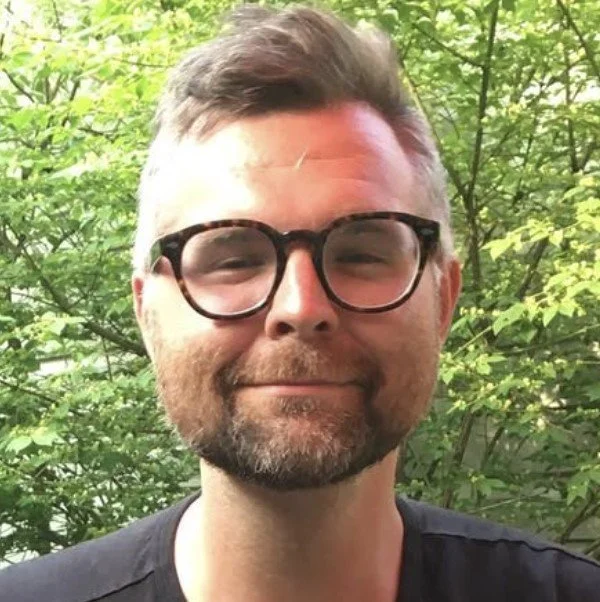
Karlis Wilde is from Stratford, Ontario, Canada, and holds a bachelor’s degree in religion and culture from Wilfrid Laurier University. His work has previously been published in the Brussels Review. You can find him on Instagram – @karliswilde.